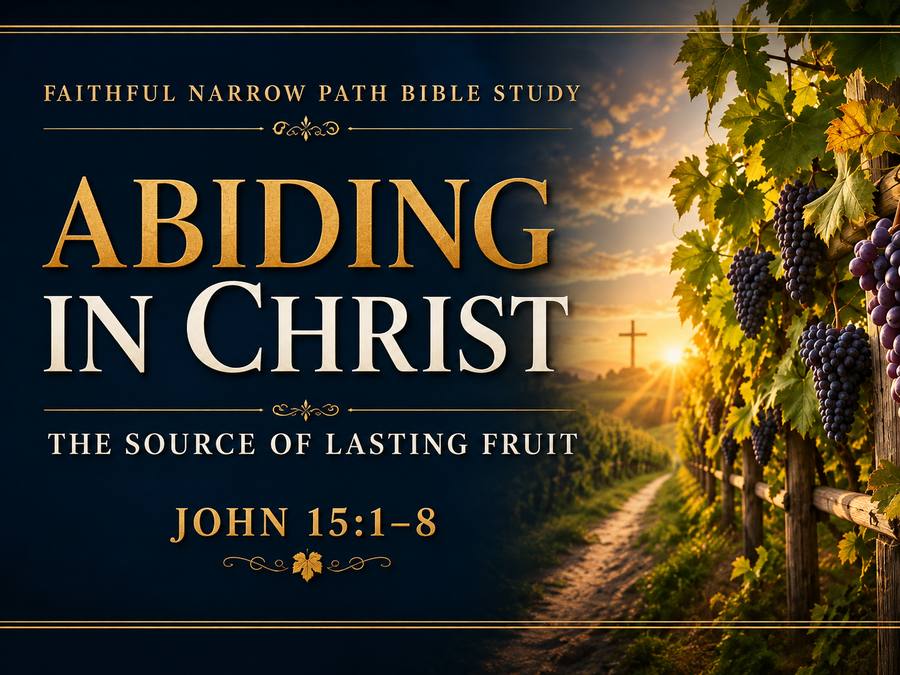
📖 Scripture Reading
John 15:1–8 (ESV)
I Am the True Vine
[1] “I am the true vine, and my Father is the vinedresser. [2] Every branch in me that does not bear fruit he takes away, and every branch that does bear fruit he prunes, that it may bear more fruit. [3] Already you are clean because of the word that I have spoken to you. [4] Abide in me, and I in you. As the branch cannot bear fruit by itself, unless it abides in the vine, neither can you, unless you abide in me. [5] I am the vine; you are the branches. Whoever abides in me and I in him, he it is that bears much fruit, for apart from me you can do nothing. [6] If anyone does not abide in me, he is thrown away like a branch and withers; and the branches are gathered, thrown into the fire, and burned. [7] If you abide in me, and my words abide in you, ask whatever you wish, and it will be done for you. [8] By this my Father is glorified, that you bear much fruit and so prove to be my disciples.
“Apart from me you can do nothing.”
John 15:5b (ESV)
🏛 Historical Context
John 15 forms part of Jesus’ final instruction to His disciples on the night before His crucifixion. Judas had departed to betray Him, and Jesus was preparing the remaining disciples for His death, resurrection, ascension, and their continued ministry after His departure.
The disciples were about to experience confusion, grief, opposition, and persecution. They would no longer enjoy Jesus’ physical presence in the same way they had during His earthly ministry. In this setting, Jesus taught them how their spiritual life and ministry would continue: they must abide in Him.
Jesus used the familiar image of a vine, branches, and a vinedresser. Vineyards were common throughout Israel, and the Old Testament frequently used the vine as an image for the nation of Israel. God had planted and cared for Israel, yet the nation repeatedly failed to produce the righteous fruit He desired (Psalm 80:8–16; Isaiah 5:1–7; Jeremiah 2:21; Hosea 10:1).
Against this background, Jesus declared, “I am the true vine.” Where Israel had failed, Jesus would remain perfectly faithful. Life, fruitfulness, and covenant blessing would be found not through national identity or human effort, but through union with Him.
📚 Literary Context
John 15 appears within what is commonly called the Farewell Discourse in John 13–17.
In John 14, Jesus comforted His disciples with the promise of the Holy Spirit and called them to love Him by keeping His commandments. John 15 develops that teaching by explaining how obedient and fruitful Christian living is possible.
Immediately following the vine-and-branches illustration, Jesus commands His disciples to remain in His love and to love one another as He has loved them. He then warns them that the world will hate and persecute those who belong to Him.
The call to abide therefore prepares the disciples both for fruitful ministry and for faithful endurance. They will not be able to accomplish either through their own strength. Their life and perseverance must continually flow from Christ.
🔍 Scripture Breakdown
John 15:1–3 — The True Vine and the Vinedresser
Jesus begins with two important declarations: He is the true vine, and His Father is the vinedresser.
A vinedresser carefully tends the vineyard. He removes branches that bear no fruit and prunes fruitful branches so that they may bear more fruit. The Father is therefore not distant or uninvolved in the spiritual development of His people. He actively works in them according to His wisdom and purpose.
Pruning may involve correction, discipline, testing, reordered priorities, or the removal of things that hinder spiritual growth. It is not evidence that God has abandoned His people. In the lives of genuine believers, His pruning is purposeful and directed toward greater fruitfulness.
Jesus then tells the disciples that they are already clean because of the word He has spoken to them. This points to the cleansing power of His message as it is received by faith. God’s Word not only informs His people; it exposes, cleanses, corrects, and shapes them.
The fruitful Christian life therefore begins with God’s gracious work. The Father tends the branches, Christ cleanses through His Word, and believers receive what God provides.
John 15:4–5 — Abide in Christ
Jesus commands His disciples to abide in Him.
To abide means to remain, continue, dwell, and persevere in dependent communion with Christ. It is not a momentary emotional experience or occasional religious activity. It describes an ongoing life of trusting Christ, receiving His Word, depending upon His grace, obeying His commands, and drawing spiritual life from Him.
A branch possesses no independent source of life. It cannot separate itself from the vine and then produce fruit through greater effort. Its fruitfulness depends entirely upon its continuing connection to the vine.
In the same way, believers cannot produce genuine spiritual fruit independently of Christ. Religious activity, discipline, knowledge, and ministry effort may appear productive for a time, but nothing of lasting spiritual value can be produced apart from Him.
Jesus does not say that believers can accomplish a small amount without Him. He says plainly, “Apart from me you can do nothing.”
This does not eliminate human responsibility. Christians are commanded to believe, pray, obey, serve, resist sin, love others, and pursue holiness. Yet all faithful obedience depends upon the grace, life, and power supplied through Christ.
Abiding is therefore not passive inactivity. It is active dependence.
John 15:6 — The Warning Against Fruitlessness
Jesus gives a solemn warning concerning the person who does not abide in Him. Such a branch is thrown away, withers, and is gathered for judgment.
This warning should not be minimized. Outward proximity to Christ, familiarity with Christian teaching, or identification with the visible community of believers does not by itself demonstrate saving union with Him.
The New Testament repeatedly teaches that persevering faith and spiritual fruit accompany genuine discipleship. Fruit does not earn salvation, but it provides evidence of the life Christ supplies.
This passage has generated discussion among faithful Christians regarding the precise identity of the fruitless branches. We should avoid forcing the illustration beyond its intended purpose. Jesus’ central point remains clear: there is no spiritual life, perseverance, or saving fruitfulness apart from Him.
The warning therefore calls every hearer to honest self-examination. We must not rest merely in religious familiarity, past experiences, or outward profession. Our confidence must be in Christ Himself.
John 15:7–8 — Abiding, Prayer, and the Father’s Glory
Jesus connects abiding in Him with allowing His words to abide in us.
This relationship reshapes prayer. Jesus is not offering an unrestricted promise that every personal desire will be granted exactly as requested. As His Word increasingly governs the believer’s mind and heart, the believer’s desires become more closely aligned with God’s character, will, and purposes.
Abiding prayer is therefore Word-shaped prayer.
The believer learns to ask according to God’s revealed truth, for the advancement of His kingdom, the growth of His people, and the glory of Christ. Such prayer is neither independent of Scripture nor centered upon selfish ambition.
Jesus concludes by explaining that the Father is glorified when His disciples bear much fruit. Fruitfulness demonstrates that they truly belong to Christ and are learning to follow Him.
The ultimate purpose of spiritual growth is therefore not personal recognition. The Father is glorified as the life of His Son becomes increasingly visible in His people.
📖 What Is Spiritual Fruit?
Spiritual fruit includes the visible results of Christ’s life and Word working within His people.
It includes Christlike character produced by the Holy Spirit: love, joy, peace, patience, kindness, goodness, faithfulness, gentleness, and self-control.
It also includes obedience to God’s commands, love for other believers, perseverance through hardship, faithful witness, generosity, service, prayer aligned with Scripture, and growing conformity to the character of Christ.
Fruit is not sinless perfection. Believers continue to struggle with sin and remain dependent upon God’s grace throughout the Christian life.
Fruit is, however, evidence of genuine spiritual life. Where Christ gives life, growth will become visible over time.
📚 Canonical Context
The theme of dependence upon God runs throughout Scripture.
Psalm 1 describes the righteous person as a tree planted beside streams of water, bearing fruit in its season. Jeremiah 17 similarly contrasts those who trust in human strength with those who trust in the Lord. The person who trusts God is like a tree planted by water that remains fruitful even during drought.
Jesus’ teaching brings this biblical imagery to its fulfillment. He is not merely the One who supplies helpful instruction about fruitfulness. He is the true vine and the source of spiritual life itself.
Paul develops this truth by teaching that believers are united with Christ in His death and resurrection. They have been crucified with Christ and now live by faith in Him (Galatians 2:20). They are called to walk in Him, rooted and built up in Him (Colossians 2:6–7).
The Holy Spirit produces fruit in believers that human effort cannot manufacture (Galatians 5:22–23). God works within His people both to desire and to accomplish what pleases Him (Philippians 2:12–13).
From beginning to end, biblical fruitfulness is the work of God’s grace operating within people who depend upon Him.
✝️ Biblical Theology
John 15 contributes to the Bible’s broader teaching concerning union with Christ.
Through faith, believers are united to Jesus Christ and share in the benefits of His saving work. He is not merely an external example whom Christians attempt to imitate from a distance. He is the living Savior from whom they receive forgiveness, righteousness, spiritual life, strength, and perseverance.
This union does not erase the distinction between Christ and the believer. Jesus remains Lord, Savior, and the source of life. Believers remain dependent branches who receive everything from Him.
Abiding describes the lived expression of this dependent relationship. Believers remain in Christ by continuing in faith, receiving His Word, depending upon His grace, communing with Him in prayer, and walking in obedience through the power of the Holy Spirit.
The gospel therefore opposes both self-salvation and spiritual passivity.
We cannot produce saving life or lasting fruit through our own strength. Yet the grace that unites believers to Christ also transforms them. Those who have received new life are called to walk faithfully in it.
🎯 Core Truth
Lasting spiritual fruit comes only through dependent, persevering communion with Jesus Christ.
Believers do not abide in order to earn salvation. They abide because Christ alone is their life, and His grace produces the fruit that glorifies the Father.
🧭 Application
This passage invites us to examine the source from which we are attempting to live.
It is possible to maintain outward Christian activity while neglecting communion with Christ. We may read merely to complete a routine, pray only when difficulties arise, serve primarily from obligation, or depend upon past knowledge instead of present trust.
Jesus calls us back to Himself.
Abiding includes receiving His Word attentively, responding in obedient faith, praying with dependence, confessing sin, resting in His finished work, participating faithfully in the life of His Church, and relying upon the Holy Spirit.
We should also consider how we respond to the Father’s pruning. When God exposes sin, redirects our priorities, corrects our thinking, or removes something that has hindered growth, we may initially experience discomfort or disappointment.
Yet the wise Vinedresser never acts carelessly. His work is purposeful, even when we do not immediately understand it.
Ask yourself:
- Am I trying to produce spiritual results through my own strength?
- Is Christ’s Word shaping my decisions, desires, and prayers?
- Have religious activity and outward productivity replaced genuine communion with Him?
- Is there visible fruit developing in my character, relationships, obedience, and witness?
- How might the Father presently be pruning me for greater fruitfulness?
📈 Progress
Spiritual fruit normally develops over time.
A branch does not produce mature fruit immediately, and believers should not expect complete maturity overnight. Nevertheless, living branches grow.
Progress may be seen through increasing love for God, growing hatred of sin, deeper trust in Scripture, greater patience with others, quicker repentance, more faithful prayer, and a stronger desire to glorify Christ.
Periods of weakness do not necessarily mean that God has stopped working. Pruning seasons may feel unproductive while the Father is preparing His people for deeper growth.
We should not measure spiritual health merely by emotional intensity or outward activity. The better question is whether we are continuing to receive life from Christ and whether His grace is gradually producing recognizable fruit.
Where growth is present, give God the glory. Where fruit is lacking, return honestly and dependently to Christ.
🙏 Encouragement
The command to abide is accompanied by the assurance that Christ is a sufficient Savior.
He does not command His people to manufacture life they do not possess. He calls them to remain in the One who supplies it.
When you feel weak, the answer is not to pretend that you are strong. Draw near to Christ.
When your prayers feel distracted, return to His Word and allow it to guide your desires.
When the Father’s pruning is painful, remember that His purpose is not destruction but fruitfulness.
When growth seems slow, do not despise small evidence of grace. Continue looking to Christ, receiving His Word, and depending upon His Spirit.
Your hope is not the strength of the branch. Your hope is the sufficiency of the Vine.
🤔 Challenge and Reflection
Take time to examine your relationship with Christ prayerfully.
- Where am I relying upon discipline, knowledge, or effort without conscious dependence upon Christ?
- Does God’s Word merely pass through my mind, or is it remaining within me and directing my life?
- What fruit of the Spirit is becoming more visible?
- Is there an area where the Father may be pruning me?
- Are my prayers being shaped by Scripture and the glory of God?
- Am I seeking fruit so that others will admire me, or so that the Father will be glorified?
Bring these questions honestly before the Lord. Confess self-reliance, receive His grace, and ask Him to deepen your communion with Christ.
⚖️ Closing Charge
Do not confuse activity with abiding.
Do not mistake religious motion for spiritual fruit.
A branch cannot sustain itself, and neither can we. Life is not found in striving independently, protecting appearances, or relying upon yesterday’s faithfulness.
Remain in Christ.
Let His Word remain in you. Depend upon His grace. Pray according to His will. Receive the Father’s pruning with trust. Walk in obedience through the power He provides.
Apart from Christ, we can do nothing of lasting spiritual value. In Him, however, the Father produces fruit that endures and brings glory to His name.
✝️ Soli Deo Gloria — To God Alone Be the Glory
The strength of the branch is never found within the branch itself.
Its life, nourishment, stability, and fruit all come from the vine.
In the same way, every evidence of spiritual life in the believer comes through the grace of Jesus Christ. We do not save ourselves, sustain ourselves, or sanctify ourselves independently of Him.
Christ is our life.
If His Word is shaping you, if repentance is growing, if love is deepening, and if obedience is becoming more evident, these are reasons to praise God for His gracious work.
Continue in Christ—not to make yourself worthy of His love, but because in Him you have received mercy, life, and every spiritual blessing.
May our lives bear much fruit, demonstrate that we are Christ’s disciples, and bring glory to our Father.
To God alone be the glory.
📚 Scriptures Referenced
Primary passage
John 15:1–8
Old Testament background
Psalm 1:1–3
Psalm 80:8–16
Isaiah 5:1–7
Jeremiah 2:21
Jeremiah 17:5–8
Hosea 10:1
New Testament context
John 13:30
John 13–17
John 14:15–27
John 15:9–27
Galatians 2:20
Galatians 5:22–23
Philippians 2:12–13
Colossians 2:6–7

Leave a comment